
Atlin's Magnetic Pull
An article from July 2025
There are geographies that transcend maps—places where the intersection of landscape and human intention creates a special kind of alchemy.
In Atlin, BC, a quiet revolution is unfolding. Not the dramatic transformation of headlines, but the patient accumulation of choices—where each decision to stay, to build, and to craft a community becomes a thread in a larger tapestry of intentional living.
The raw statistics reveal little of this deeper story: 477 permanent residents, accessible only through the Yukon, connected to the outside world by a road that didn’t exist until 1951. This cannot capture the gravitational pull that compels someone to cancel flights to New Zealand, abandon urban careers, or dedicate decades to preserving the stories of a gold rush town whose population peak lies more than a century in the past.
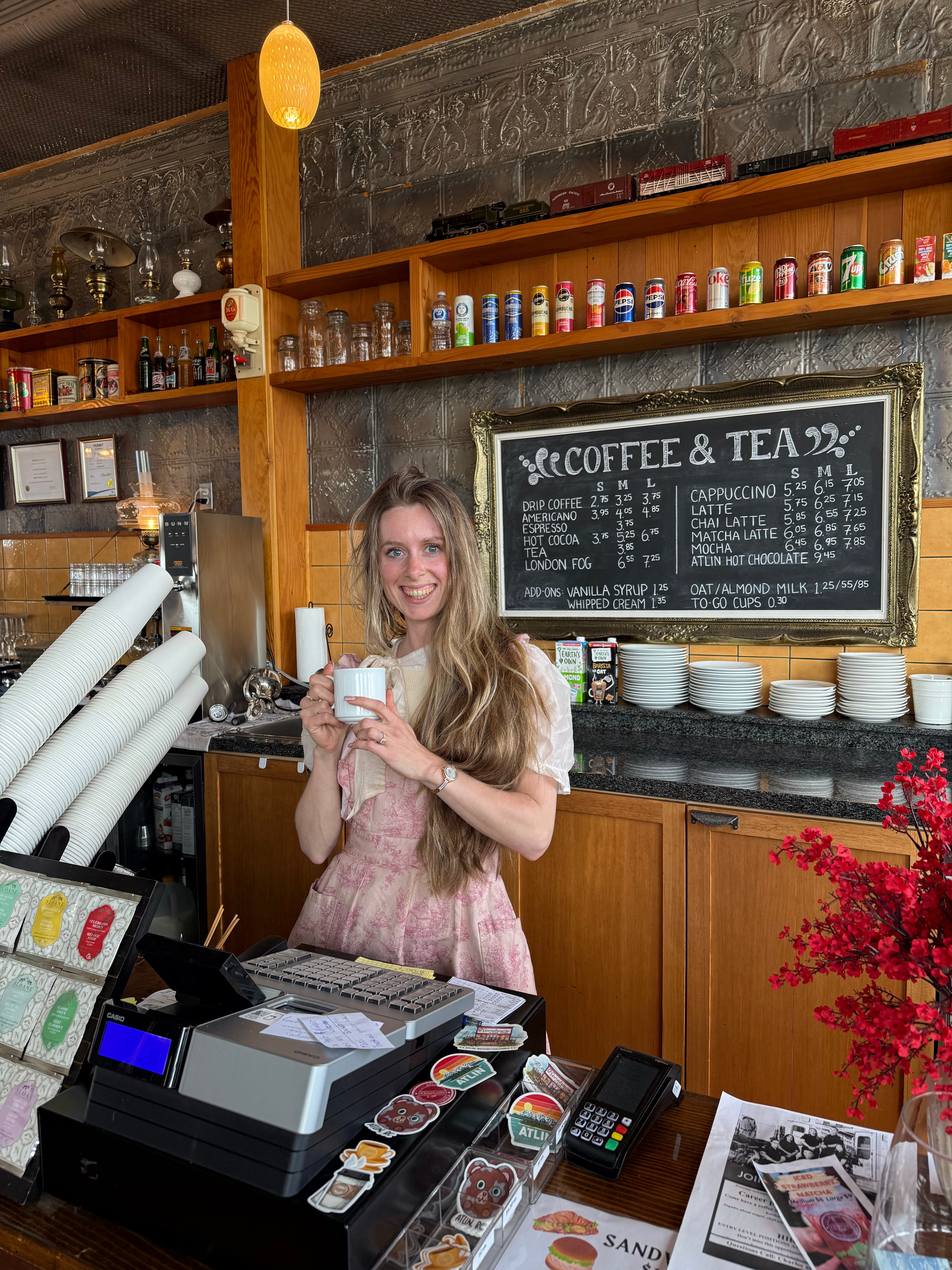
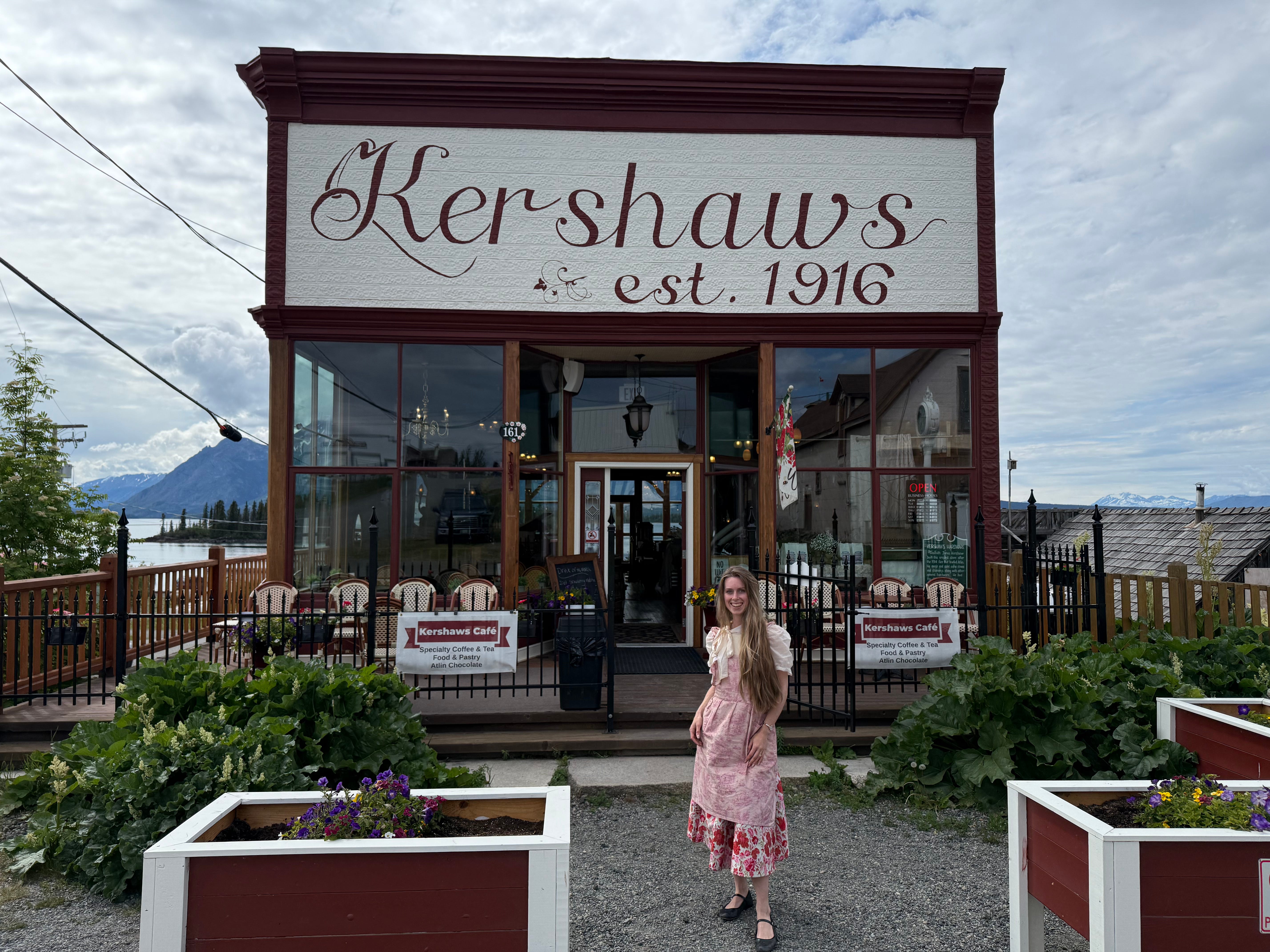
At Kershaws Café, housed within the restored bones of a 1916 building overlooking Atlin Lake, Amélie Remon has created something that transcends simple hospitality. The Quebec-born chocolatier arrived eight years ago to visit her brother and found herself unable to leave. “I just fell in love with the place so much,” she explains, gesturing toward the lake and mountains from her cafe’s deck. “I was supposed to go to New Zealand and I had my ticket, my job, everything. And I was like, wow, I cannot go anywhere. I feel home.”
Amélie started Atlin Chocolate during COVID, when she realized that delivering her treats to locals was something more than a hobby. One of her customers owned Kershaws, a hardware store during the heyday of tourism following the gold rush of 1898, which then operated as a cafe for a short time twenty years ago. The building is one of Atlin’s most beautiful, with its tall windows and superb view of the lake. When her customer offered to sell it, Amélie realized that serendipity was striking again.
Kershaws staff dress in period costumes and move through spaces adorned with antiques, including a mirror salvaged from New York’s Plaza Hotel. They serve real hot chocolate that is so rich and delicious, you can’t help but slow down with every sip. Each detail—from the acoustic guitar filtering through quality speakers to the cast iron and marble she envisions adding—represents not mere aesthetic choice but a fundamental belief in hospitality as sacred work.
“It’s about destiny,” Amélie reflects. “Things happen for a reason, and in Atlin, they just fall into place.” Her success emerges not from accident but from treating each element of experience, from furniture placement visualized through her iPad to the elaborate, limited Christmas opening of the cafe, as essential to creating moments that transcend the ordinary.
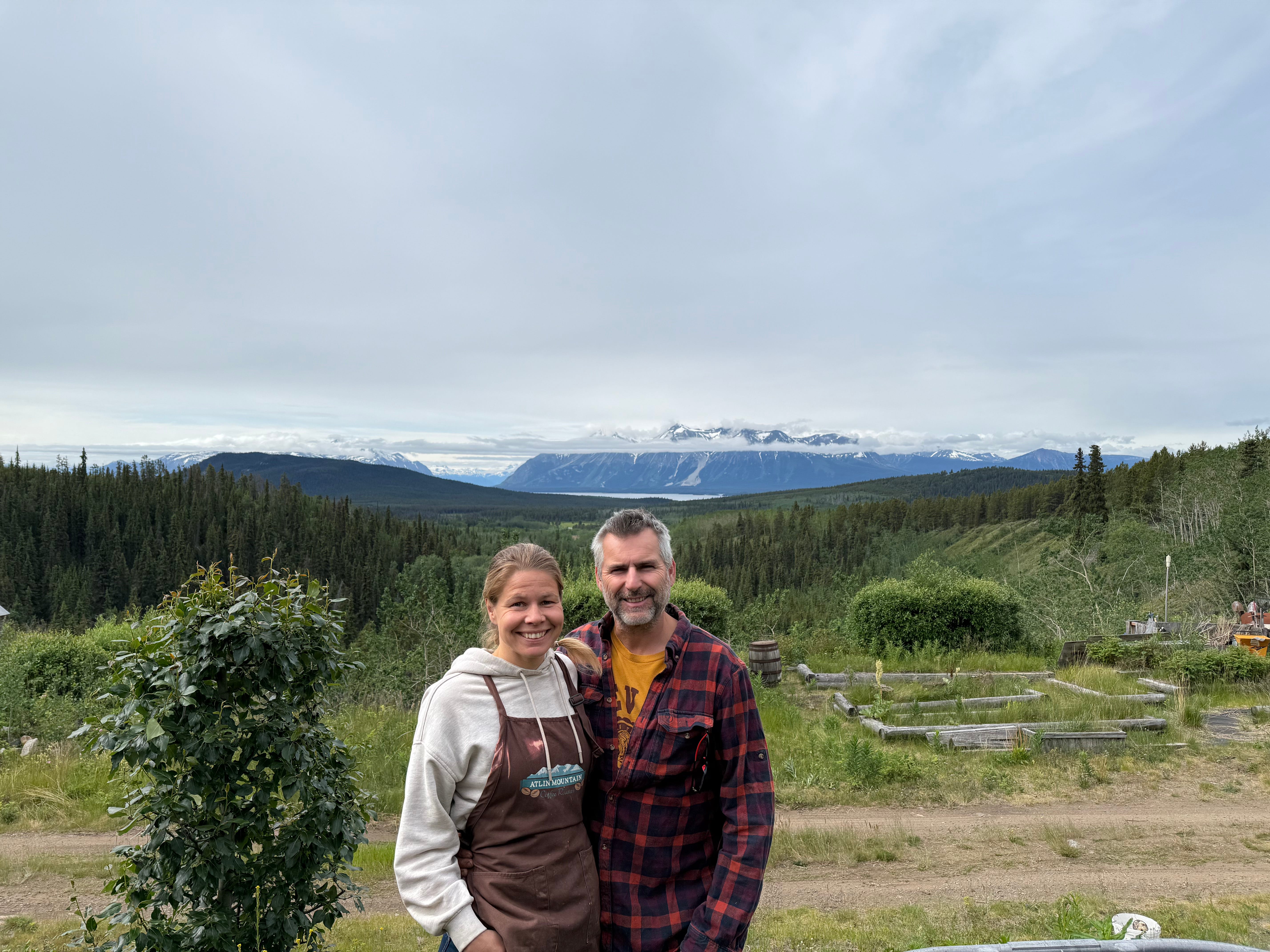
Ten minutes from town, along a winding road that leads to a solar-powered log cabin perched above the treeline, Philippe and Leandra Brient have found their own harmony. Atlin Mountain Coffee Roasters operates from a narrow workspace attached to their home where a 700-kilogram wood-fired roaster imported from Italy stands in the corner like functional sculpture. The couple met in Atlin nearly two decades ago and soon began both their family and their partnership.
Hey! Enjoying this? Share it with someone you think would dig it too, and nudge them to subscribe. Like and comment—I’d love to hear what you think!
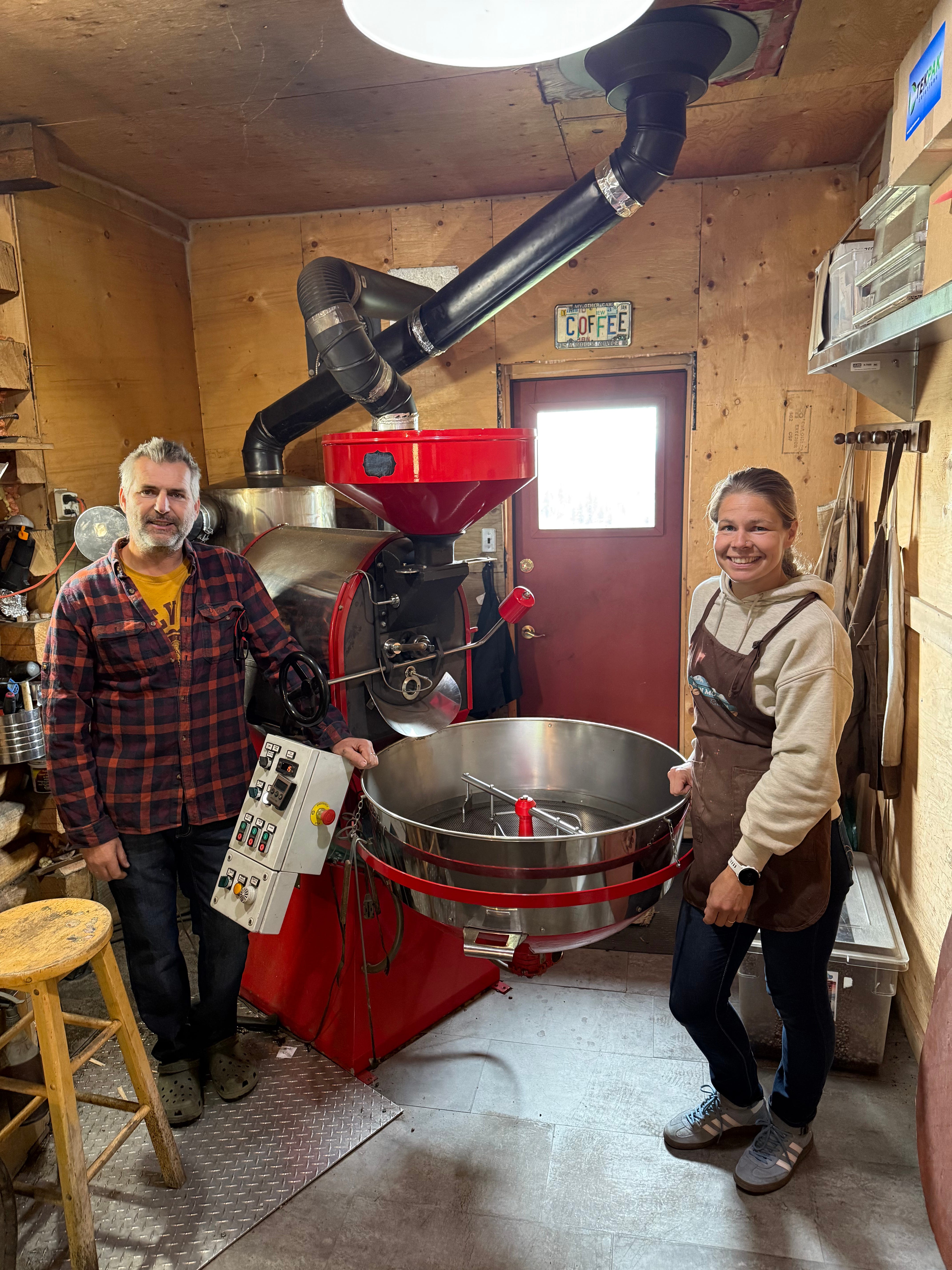
“It’s a little bit of a pioneer vibe,” Philippe observes, describing both their business model and Atlin’s broader cultural atmosphere. Against the wall is a tall rack of 15 bins of coffee beans, each labeled with their own unique retail package. All the bins are chained up to the rack: earthquake-proofing. The challenges the Brients navigate—sourcing beans during global supply disruptions, managing roasting schedules around winter daylight, balancing family life with Canadian Rangers service, let alone preparing for an earthquake—become part of rather than obstacles to their success.
When I ask why they chose this place to work, then stay, then raise a family and start a business, Leandra says that Atlin is magnetic. “I think it’s the freedom and the empty space and the access to the backcountry,” she says. “There’s a great community spirit and so many things to do, and because Atlin is remote, but with its gold mining history, there’s lots of old roads and trails.”
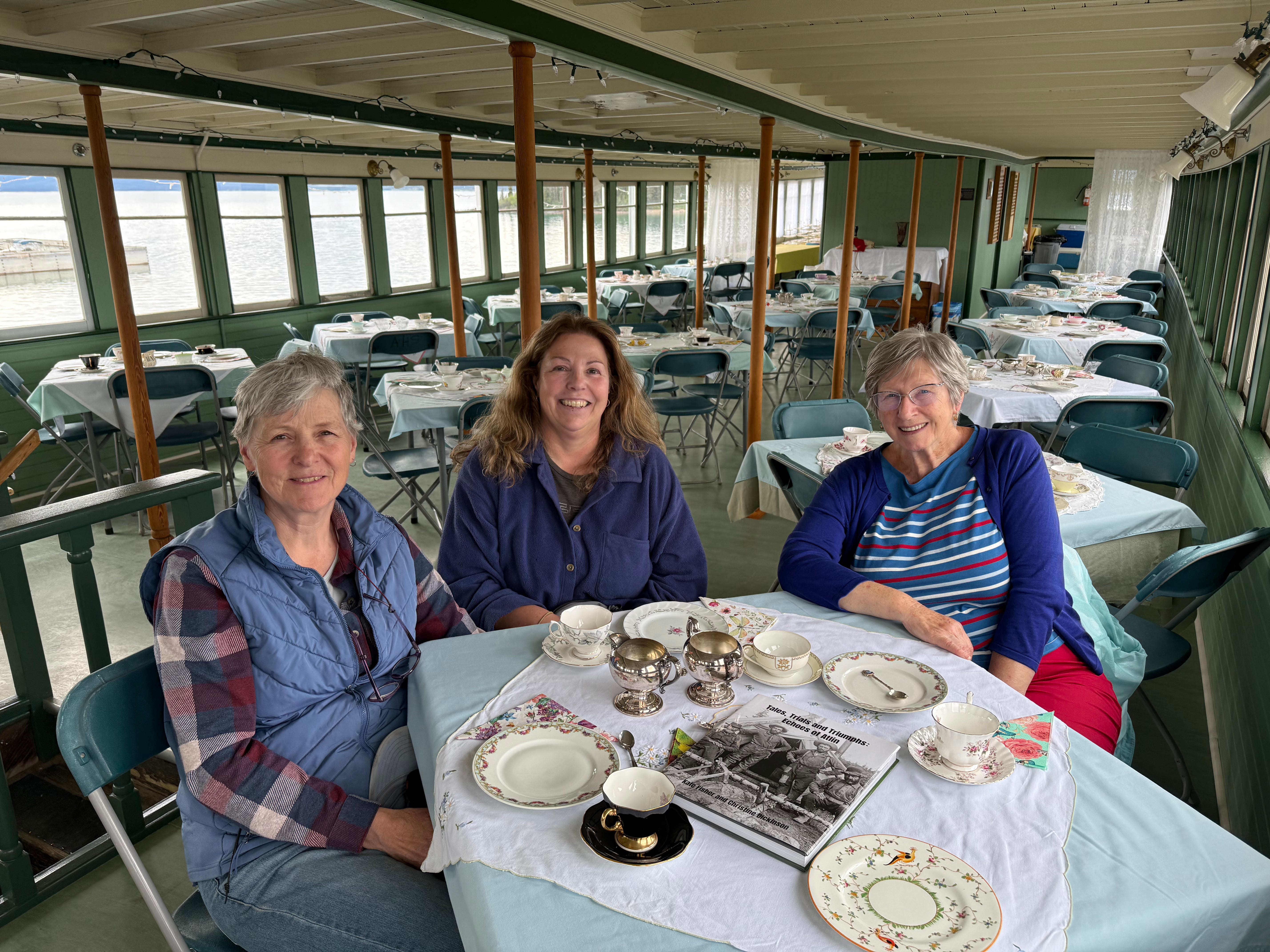
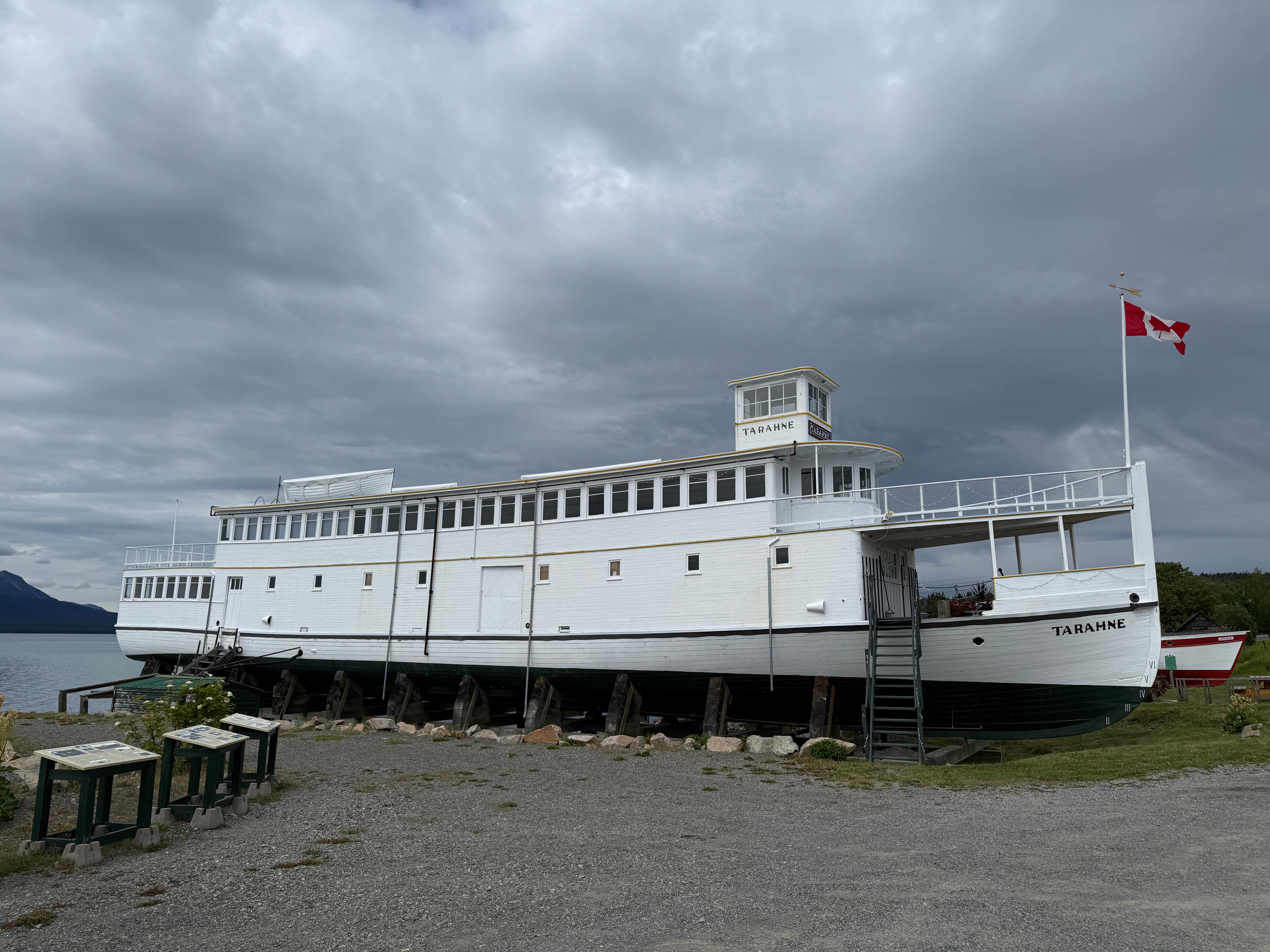
Back in town, I’m aboard the MV Tarahne, a lovingly restored 1917 vessel that once carried tourists across Atlin Lake during the town’s emergence as an tourist destination. Three women from the Atlin Historical Society—Kate Fisher, Christine Dickinson, and Rose Anne Anttila—prepare for their annual “Tea on the Tarahne” fundraiser, an event that sells out within three hours and requires fifty volunteers to execute.
Kate and Christine’s recently published book, Tales, Trials and Triumphs: Echoes of Atlin, represents years of collaborative archaeology, excavating and preserving stories that might otherwise dissolve into the northern silence. Yet their work transcends historical preservation to illuminate how communities sustain themselves across generations through patient tending of collective memory.
“We look after each other,” Rose Anne Anttila, the Historical Society’s president, explains. “Sometimes you feel like you’re in a fishbowl because everybody knows everybody’s business, but everybody’s got your back when you need it.” Christine Dickinson continues the thread in her soft British accent, and recalls substituting as a teacher. She knew not merely every student but their family histories and home circumstances—an intimacy of connection impossible within larger centres, yet essential here in Atlin.
Just as prospectors in 1898 chose Atlin over the more celebrated Klondike goldfields, today’s residents make conscious decisions to prioritize quality in their lives, in their businesses, and in their attention. There is a metamorphosis of individual passions into collective prosperity, geographical isolation into creative freedom, and historical preservation into contemporary relevance.
Atlin’s “Switzerland of the North” designation transcends tourism marketing to describe a way of living that values beauty, craft, and connection as necessities rather than luxuries. In a world defined by speed and scale, this small town beside a long lake and tall mountains reminds us that certain forms of wealth resist measurement—and that sometimes the most radical act is the simple decision to let yourself be pulled in. And then to remain, to tend, and to live.
Did you enjoy this piece? What do you want to see more, or less of, in the future? Let me know!
Quote of the Week
“The greatest thing in the world is to know how to belong to oneself.”
Wow! Ben, you writing is supreme. Thank you for this piece.